AT A GLANCE
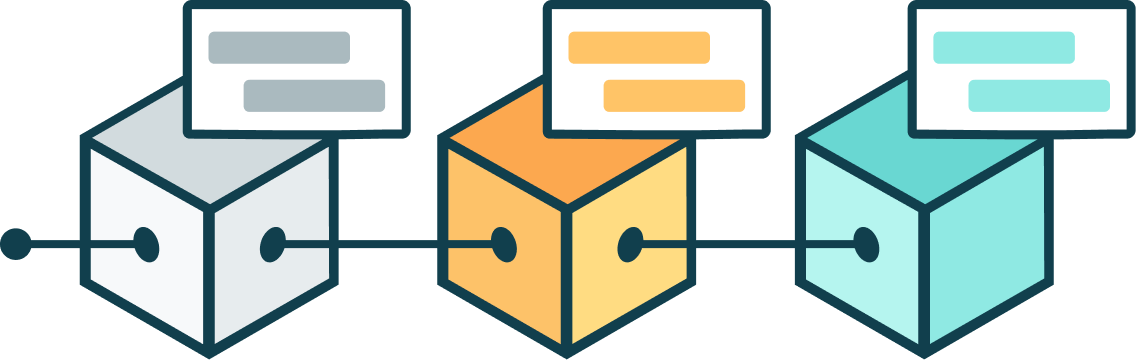
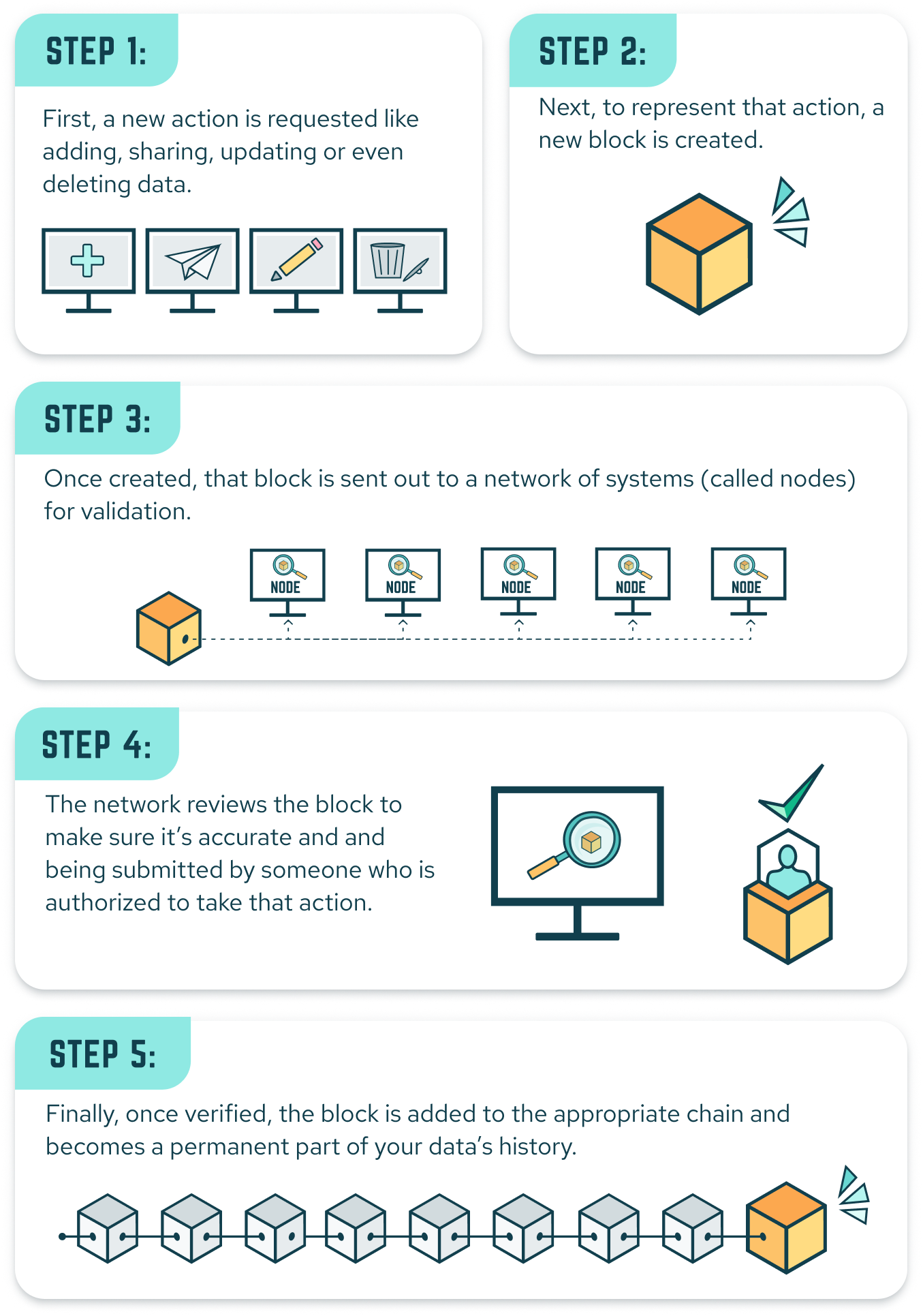
Blockchain is like a permanent record book for your data, shared across a network and protected from tampering. It works by recording each change or interaction as its own “block,” and linking that block to the ones before and after it to form a chain. Every data asset maintains an unchangeable record, including details of any deletions made to comply with “the right to be forgotten” regulations.
What makes blockchain so powerful is that the network works together to confirm what’s true, building collaborative trust into data management. For your data, that means transparency, security, and a clear record of everything that’s happened, without needing to rely on one central system.
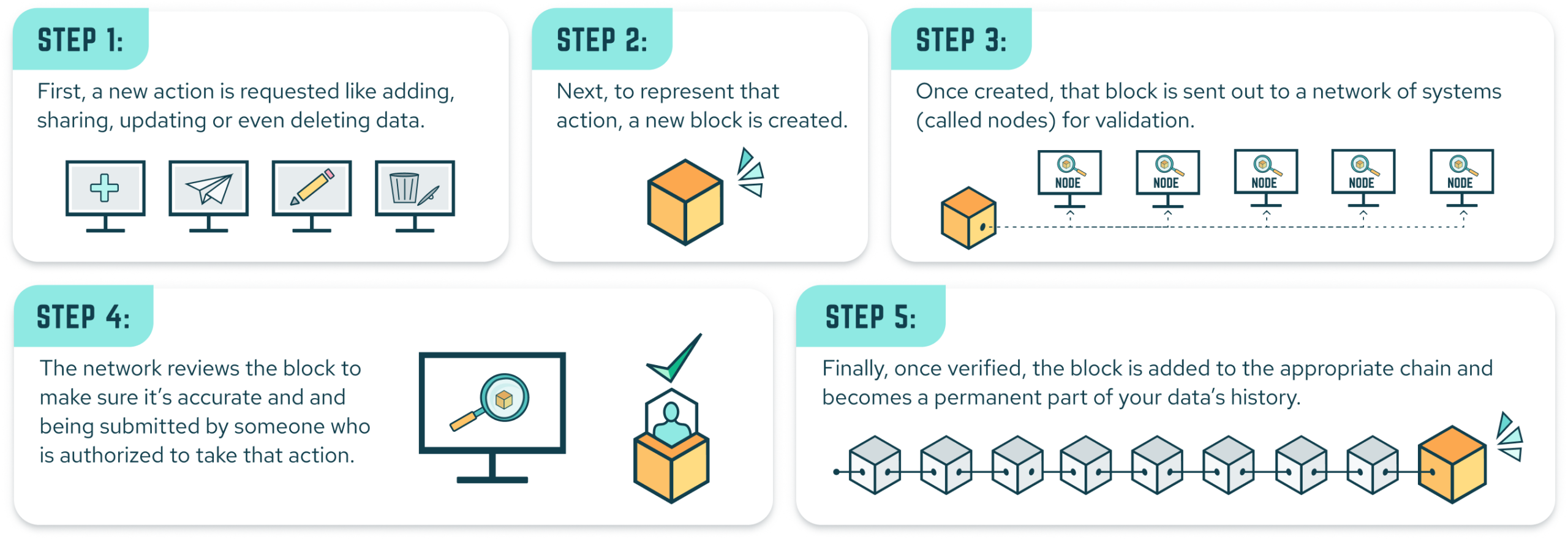
HOW DOES IT WORK?
BLOCKCHAIN CORE ELEMENTS

Decentralized by Design, Resilient by Nature
LifeGraph uses a decentralized architecture to eliminate single points of failure and reduce systemic risk. By distributing trust across the network rather than concentrating it in one system, LifeGraph strengthens security, improves resilience, and enables safe collaboration across organizations without sacrificing control or ownership.
Cryptographic Integrity You Can Prove
Every data object in LifeGraph is cryptographically signed and anchored to an immutable ledger. This ensures data authenticity from the moment it’s created, making every interaction verifiable, traceable, and auditable over time. Integrity isn’t assumed, it’s mathematically enforced.
Ownership, Identity, & Consent Built Into the Data
LifeGraph embeds identity, permissions, and consent directly into each data asset instead of managing them externally. This self-sovereign model ensures access rights travel with the data itself, so every interaction respects context, consent, and ownership without relying on centralized enforcement.
Automatic, Always-On Auditability
Audit trails in LifeGraph are not an afterthought or a separate reporting layer. Every change, access, and exchange is captured automatically as part of the data lifecycle, removing the need to reconcile logs or trust system-level reports. Auditability is continuous, consistent, and built in by default.
Trust Without Intermediaries
By leveraging smart contracts and verifiable data exchange, LifeGraph enables organizations to automate relationships and enforce rules without relying on intermediaries or blind trust. Data sharing becomes explicit, provable, and governed by code, accelerating partnerships while reducing friction and risk.
BUILT FOR THE BRAVE
With LifeGraph, blockchain works quietly behind the scenes to solve everyday data challenges. It helps organizations prove where data came from, who can use it, and whether it can be trusted. In industries like healthcare, education, life sciences, and government, trust is not abstract. It determines whether data can be shared safely, AI can be deployed responsibly, and compliance requirements can be met with confidence. LifeGraph uses blockchain to make trust operational, not theoretical.
Rather than asking teams to understand cryptography or manage complex infrastructure, LifeGraph embeds trust directly into the data itself. This reduces manual checks, removes assumptions, and eliminates friction as data moves across systems and organizations. Whether you are training AI on sensitive datasets, collaborating with partners, or navigating regulatory requirements, security, accountability, and compliance are enforced automatically so teams mentioned can focus on innovation with confidence.
explore other core capabilities:
AT A GLANCE
Blockchain is like a permanent record book for your data, shared across a network and protected from tampering. It works by recording each change or interaction as its own “block,” and linking that block to the ones before and after it to form a chain. Every data asset maintains an unchangeable record, including details of any deletions made to comply with “the right to be forgotten” regulations.
What makes blockchain so powerful is that the network works together to confirm what’s true, building collaborative trust into data management. For your data, that means transparency, security, and a clear record of everything that’s happened, without needing to rely on one central system.
HOW DOES IT WORK?
BLOCKCHAIN CORE ELEMENTS
Decentralized by Design, Resilient by Nature
LifeGraph uses a decentralized architecture to eliminate single points of failure and reduce systemic risk. By distributing trust across the network rather than concentrating it in one system, LifeGraph strengthens security, improves resilience, and enables safe collaboration across organizations without sacrificing control or ownership.
Cryptographic Integrity You Can Prove
Every data object in LifeGraph is cryptographically signed and anchored to an immutable ledger. This ensures data authenticity from the moment it’s created, making every interaction verifiable, traceable, and auditable over time. Integrity isn’t assumed, it’s mathematically enforced.
Ownership, Identity, & Consent Built Into the Data
LifeGraph embeds identity, permissions, and consent directly into each data asset instead of managing them externally. This self-sovereign model ensures access rights travel with the data itself, so every interaction respects context, consent, and ownership without relying on centralized enforcement.
Automatic, Always-On Auditability
Audit trails in LifeGraph are not an afterthought or a separate reporting layer. Every change, access, and exchange is captured automatically as part of the data lifecycle, removing the need to reconcile logs or trust system-level reports. Auditability is continuous, consistent, and built in by default.
Trust Without Intermediaries
By leveraging smart contracts and verifiable data exchange, LifeGraph enables organizations to automate relationships and enforce rules without relying on intermediaries or blind trust. Data sharing becomes explicit, provable, and governed by code, accelerating partnerships while reducing friction and risk.
BUILT FOR THE BRAVE
With LifeGraph, blockchain works quietly behind the scenes to solve everyday data challenges. It helps organizations prove where data came from, who can use it, and whether it can be trusted. In industries like healthcare, education, life sciences, and government, trust is not abstract. It determines whether data can be shared safely, AI can be deployed responsibly, and compliance requirements can be met with confidence. LifeGraph uses blockchain to make trust operational, not theoretical.
Rather than asking teams to understand cryptography or manage complex infrastructure, LifeGraph embeds trust directly into the data itself. This reduces manual checks, removes assumptions, and eliminates friction as data moves across systems and organizations. Whether you are training AI on sensitive datasets, collaborating with partners, or navigating regulatory requirements, security, accountability, and compliance are enforced automatically so teams mentioned can focus on innovation with confidence.
explore other core capabilities:
AT A GLANCE
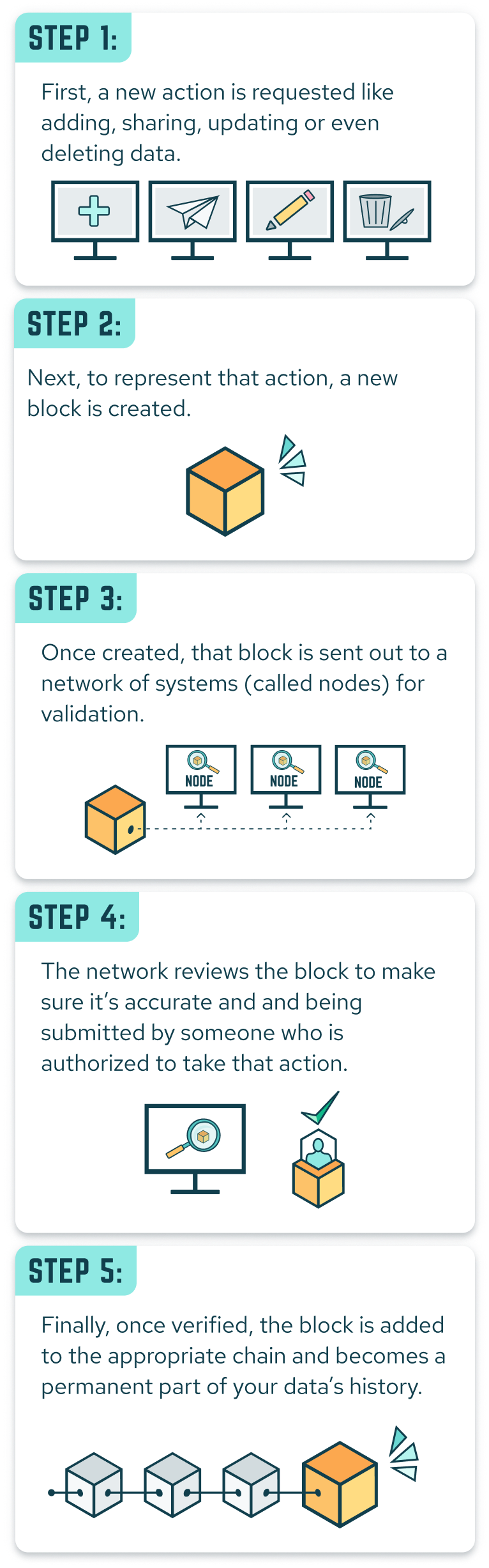
Blockchain is like a permanent record book for your data, shared across a network and protected from tampering. It works by recording each change or interaction as its own “block,” and linking that block to the ones before and after it to form a chain. Every data asset maintains an unchangeable record, including details of any deletions made to comply with “the right to be forgotten” regulations.
What makes blockchain so powerful is that the network works together to confirm what’s true, building collaborative trust into data management. For your data, that means transparency, security, and a clear record of everything that’s happened, without needing to rely on one central system.
HOW DOES IT WORK?
BLOCKCHAIN CORE ELEMENTS
Decentralized by Design, Resilient by Nature
LifeGraph uses a decentralized architecture to eliminate single points of failure and reduce systemic risk. By distributing trust across the network rather than concentrating it in one system, LifeGraph strengthens security, improves resilience, and enables safe collaboration across organizations without sacrificing control or ownership.
Cryptographic Integrity You Can Prove
Every data object in LifeGraph is cryptographically signed and anchored to an immutable ledger. This ensures data authenticity from the moment it’s created, making every interaction verifiable, traceable, and auditable over time. Integrity isn’t assumed, it’s mathematically enforced.
Ownership, Identity, & Consent Built Into the Data
LifeGraph embeds identity, permissions, and consent directly into each data asset instead of managing them externally. This self-sovereign model ensures access rights travel with the data itself, so every interaction respects context, consent, and ownership without relying on centralized enforcement.
Automatic, Always-On Auditability
Audit trails in LifeGraph are not an afterthought or a separate reporting layer. Every change, access, and exchange is captured automatically as part of the data lifecycle, removing the need to reconcile logs or trust system-level reports. Auditability is continuous, consistent, and built in by default.
Trust Without Intermediaries
By leveraging smart contracts and verifiable data exchange, LifeGraph enables organizations to automate relationships and enforce rules without relying on intermediaries or blind trust. Data sharing becomes explicit, provable, and governed by code, accelerating partnerships while reducing friction and risk.
BUILT FOR THE BRAVE
With LifeGraph, blockchain works quietly behind the scenes to solve everyday data challenges. It helps organizations prove where data came from, who can use it, and whether it can be trusted. In industries like healthcare, education, life sciences, and government, trust is not abstract. It determines whether data can be shared safely, AI can be deployed responsibly, and compliance requirements can be met with confidence. LifeGraph uses blockchain to make trust operational, not theoretical.
Rather than asking teams to understand cryptography or manage complex infrastructure, LifeGraph embeds trust directly into the data itself. This reduces manual checks, removes assumptions, and eliminates friction as data moves across systems and organizations. Whether you are training AI on sensitive datasets, collaborating with partners, or navigating regulatory requirements, security, accountability, and compliance are enforced automatically so teams mentioned can focus on innovation with confidence.
explore other core capabilities: