
MCP Server
the open standard that makes it all work together
AT A GLANCE
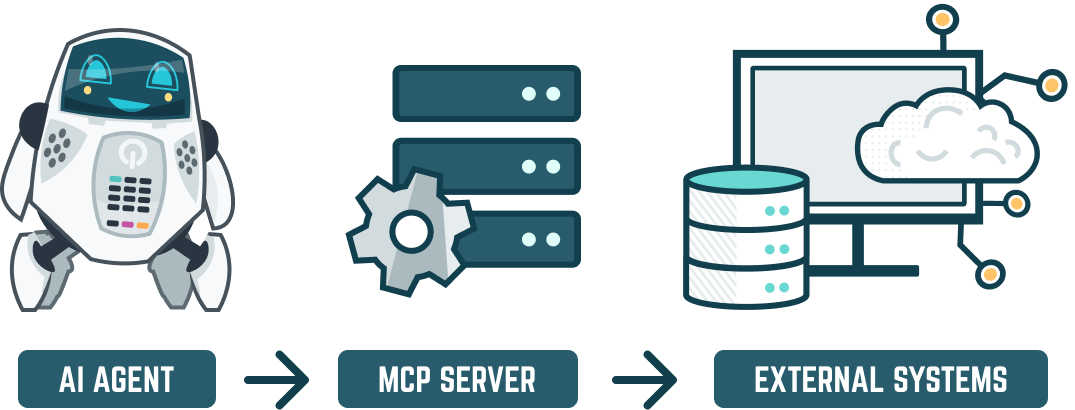
The Model Context Protocol is the emerging open standard for how AI agents connect to external tools, data, and systems. Think of it the way TCP/IP standardized communication across the internet, MCP does the same for the agentic world, replacing a tangle of custom, brittle integrations with a single universal interface.
For LifeGraph, that means your agents can discover available capabilities, authenticate securely, and access the data they need without custom connectors for every tool in your stack.
What MCP Makes Possible:

Connect Once, Use Everywhere
A single MCP integration unlocks thousands of community-built servers across productivity tools, databases, APIs, and enterprise systems. So, no custom code per connection.
Agents That Know What They Can Do
MCP lets agents discover available tools and data sources at runtime, so they’re always working with the full picture of what’s accessible to them.
Secure by Default
Authentication is built into the protocol. Agents and servers verify each other before any data is exchanged.
Multi-Agent Workflows
Specialized agents can hand off work to one another through MCP — one researches, one analyzes, one acts — all coordinated through a shared standard.
Legacy System Ready
Your existing infrastructure doesn’t need to be replaced. By adding an MCP client, you can connect it directly to LifeGraph making it instantly accessible to any agent in your ecosystem without changing your core systems.
Less Overhead, More Context
MCP reduces token waste and integration overhead, so your agents spend less time managing connections and more time doing useful work.
BUILT FOR THE BRAVE
MCP is excellent at connecting agents to the world. But connectivity alone doesn’t make agentic AI safe to deploy in a regulated enterprise environment. Out of the box, MCP has no way to verify who an agent is, track what it did, enforce consent policies, or produce the kind of audit trail that compliance teams require.
That’s exactly the gap LifeGraph was built to fill. When agents operate inside LifeGraph, every action is cryptographically logged, every data access is governed by the rules embedded in the data itself, and every decision can be traced back to its source. MCP handles the connectivity. LifeGraph handles the trust.

EXPLORE OTHER FEATURES:
MCP Server
the open standard that makes it all work together
AT A GLANCE
The Model Context Protocol is the emerging open standard for how AI agents connect to external tools, data, and systems. Think of it the way TCP/IP standardized communication across the internet, MCP does the same for the agentic world, replacing a tangle of custom, brittle integrations with a single universal interface.
For LifeGraph, that means your agents can discover available capabilities, authenticate securely, and access the data they need without custom connectors for every tool in your stack.
What MCP Makes Possible:
Connect Once, Use Everywhere
A single MCP integration unlocks thousands of community-built servers across productivity tools, databases, APIs, and enterprise systems. So, no custom code per connection.
Agents That Know What They Can Do
MCP lets agents discover available tools and data sources at runtime, so they’re always working with the full picture of what’s accessible to them.
Secure by Default
Authentication is built into the protocol. Agents and servers verify each other before any data is exchanged.
Multi-Agent Workflows
Specialized agents can hand off work to one another through MCP — one researches, one analyzes, one acts — all coordinated through a shared standard.
Legacy System Ready
Your existing infrastructure doesn’t need to be replaced. By adding an MCP client, you can connect it directly to LifeGraph making it instantly accessible to any agent in your ecosystem without changing your core systems.
Less Overhead, More Context
MCP reduces token waste and integration overhead, so your agents spend less time managing connections and more time doing useful work.
BUILT FOR THE BRAVE
MCP is excellent at connecting agents to the world. But connectivity alone doesn’t make agentic AI safe to deploy in a regulated enterprise environment. Out of the box, MCP has no way to verify who an agent is, track what it did, enforce consent policies, or produce the kind of audit trail that compliance teams require.
That’s exactly the gap LifeGraph was built to fill. When agents operate inside LifeGraph, every action is cryptographically logged, every data access is governed by the rules embedded in the data itself, and every decision can be traced back to its source. MCP handles the connectivity. LifeGraph handles the trust.
EXPLORE OTHER FEATURES:
MCP Server
the open standard that makes it all work together
AT A GLANCE
The Model Context Protocol is the emerging open standard for how AI agents connect to external tools, data, and systems. Think of it the way TCP/IP standardized communication across the internet, MCP does the same for the agentic world, replacing a tangle of custom, brittle integrations with a single universal interface.
For LifeGraph, that means your agents can discover available capabilities, authenticate securely, and access the data they need without custom connectors for every tool in your stack.
What MCP Makes Possible:
Connect Once, Use Everywhere
A single MCP integration unlocks thousands of community-built servers across productivity tools, databases, APIs, and enterprise systems. So, no custom code per connection.
Agents That Know What They Can Do
MCP lets agents discover available tools and data sources at runtime, so they’re always working with the full picture of what’s accessible to them.
Secure by Default
Authentication is built into the protocol. Agents and servers verify each other before any data is exchanged.
Multi-Agent Workflows
Specialized agents can hand off work to one another through MCP — one researches, one analyzes, one acts — all coordinated through a shared standard.
Legacy System Ready
Your existing infrastructure doesn’t need to be replaced. By adding an MCP client, you can connect it directly to LifeGraph making it instantly accessible to any agent in your ecosystem without changing your core systems.
Less Overhead, More Context
MCP reduces token waste and integration overhead, so your agents spend less time managing connections and more time doing useful work.
BUILT FOR THE BRAVE
MCP is excellent at connecting agents to the world. But connectivity alone doesn’t make agentic AI safe to deploy in a regulated enterprise environment. Out of the box, MCP has no way to verify who an agent is, track what it did, enforce consent policies, or produce the kind of audit trail that compliance teams require.
That’s exactly the gap LifeGraph was built to fill. When agents operate inside LifeGraph, every action is cryptographically logged, every data access is governed by the rules embedded in the data itself, and every decision can be traced back to its source. MCP handles the connectivity. LifeGraph handles the trust.
EXPLORE OTHER FEATURES: