

Use Cases & Markets

Regulated industries face a unique paradox: AI can dramatically accelerate their work, but the cost of a mistake is measured in patient outcomes, financial penalties, and irreversible regulatory violations. LifeGraph is the knowledge and governance layer built for industries where trust matters most.

Use Cases & Markets

Regulated industries face a unique paradox: AI can dramatically accelerate their work, but the cost of a mistake is measured in patient outcomes, financial penalties, and irreversible regulatory violations. LifeGraph is the knowledge and governance layer built for industries where trust matters most.

Use Cases & Markets

Regulated industries face a unique paradox: AI can dramatically accelerate their work, but the cost of a mistake is measured in patient outcomes, financial penalties, and irreversible regulatory violations.

LifeGraph is the knowledge and governance layer built for industries where trust matters most.

Healthcare

Healthcare systems, payers, and solution providers sit on the most sensitive data in existence: patient records, diagnostic history, clinical notes. They face mounting pressure to incorporate AI to improve outcomes, streamline processes, and reduce fraud, waste, and abuse (FWA) without violating HIPAA and other patient privacy regulations.

  • Without a unified, validated, and contextualized knowledge source, AI can hallucinate and risk patient safety
  • PHI (Protected Health Information) exposure through LLM prompts and retrieval pipelines triggers HIPAA violations
  • No audit trail for AI-assisted workflows leaves organizations legally exposed
  • Fragmented systems and inconsistent source data block AI from reasoning accurately

Life Sciences

Pharmaceutical and biotech organizations are deploying AI across drug discovery, manufacturing operations, and regulatory submissions. Every AI-assisted decision must be reproducible, auditable, and defensible to the FDA, and critical intellectual property must be protected from potential leakage to open LLMs.

  • Privacy risk when enterprises leverage non-compliant LLMs or fail to implement AI as fully private, walled-gardens
  • Regulatory risk if agents are not fully traceable back to knowledge sources
  • Data integrity risk when AI systems access, summarize, or transform clinical trial data without governance or traceability
  • IP leakage risk when proprietary compound data enters commercial LLM pipelines

FinTech & Financial Services

Financial institutions face compounding complexity: AI systems that can self-spawn, move money, trigger trades, or surface client recommendations must operate within a framework where every action is explainable, every data source is authoritative, and every decision is logged.

  • Agentic AI with access to financial systems creates catastrophic risk if it acts on stale or incorrect data
  • Explainability requirements from SEC and FINRA mean “the AI decided” is not a defensible answer for legal claims
  • NPI (Non-Public Information) exposure across agentic workflows triggers regulatory violations and fiduciary liability
  • AML and fraud detection systems require real-time, governed data pipelines that traditional infrastructures struggle to provide

EdTech & Education

Educational institutions and platforms hold deeply sensitive student data governed by strict federal law, including academic performance, learning disabilities, and disciplinary history. AI-enabled administrative and digital learning agents must be built on a foundation that protects student data by design.

  • FERPA strictly governs who can access student education records; agentic AI systems can inadvertently leak data and violate privacy
  • COPPA prohibits collecting data from children under 13 without consent; EdTech AI pipelines must enforce consent at every layer
  • AI tutoring and assessment tools without grounded, curriculum-aligned knowledge bases produce unreliable, inconsistent educational content
  • IEP and special education data carries heightened sensitivity that poorly governed AI infrastructures ignore

Healthcare

Healthcare systems, payers, and solution providers sit on the most sensitive data in existence: patient records, diagnostic history, clinical notes. They face mounting pressure to incorporate AI to improve outcomes, streamline processes, and reduce fraud, waste, and abuse (FWA) without violating HIPAA and other patient privacy regulations.

  • Without a unified, validated, and contextualized knowledge source, AI can hallucinate and risk patient safety
  • PHI (Protected Health Information) exposure through LLM prompts and retrieval pipelines triggers HIPAA violations
  • No audit trail for AI-assisted workflows leaves organizations legally exposed
  • Fragmented systems and inconsistent source data block AI from reasoning accurately

Life Sciences

Pharmaceutical and biotech organizations are deploying AI across drug discovery, manufacturing operations, and regulatory submissions. Every AI-assisted decision must be reproducible, auditable, and defensible to the FDA, and critical intellectual property must be protected from potential leakage to open LLMs.

  • Privacy risk when enterprises leverage non-compliant LLMs or fail to implement AI as fully private, walled-gardens
  • Regulatory risk if agents are not fully traceable back to knowledge sources
  • Data integrity risk when AI systems access, summarize, or transform clinical trial data without governance or traceability
  • IP leakage risk when proprietary compound data enters commercial LLM pipelines

FinTech & Financial Services

Financial institutions face compounding complexity: AI systems that can self-spawn, move money, trigger trades, or surface client recommendations must operate within a framework where every action is explainable, every data source is authoritative, and every decision is logged.

  • Agentic AI with access to financial systems creates catastrophic risk if it acts on stale or incorrect data
  • Explainability requirements from SEC and FINRA mean “the AI decided” is not a defensible answer for legal claims
  • NPI (Non-Public Information) exposure across agentic workflows triggers regulatory violations and fiduciary liability
  • AML and fraud detection systems require real-time, governed data pipelines that traditional infrastructures struggle to provide

EdTech & Education

Educational institutions and platforms hold deeply sensitive student data governed by strict federal law, including academic performance, learning disabilities, and disciplinary history. AI-enabled administrative and digital learning agents must be built on a foundation that protects student data by design.

  • FERPA strictly governs who can access student education records; agentic AI systems can inadvertently leak data and violate privacy
  • COPPA prohibits collecting data from children under 13 without consent; EdTech AI pipelines must enforce consent at every layer
  • AI tutoring and assessment tools without grounded, curriculum-aligned knowledge bases produce unreliable, inconsistent educational content
  • IEP and special education data carries heightened sensitivity that poorly governed AI infrastructures ignore

Healthcare

Healthcare systems, payers, and solution providers sit on the most sensitive data in existence: patient records, diagnostic history, clinical notes. They face mounting pressure to incorporate AI to improve outcomes, streamline processes, and reduce fraud, waste, and abuse (FWA) without violating HIPAA and other patient privacy regulations.

• Without a unified, validated, and contextualized knowledge source, AI can hallucinate and risk patient safety

• PHI (Protected Health Information) exposure through LLM prompts and retrieval pipelines triggers HIPAA violations

• No audit trail for AI-assisted workflows leaves organizations legally exposed

• Fragmented systems and inconsistent source data block AI from reasoning accurately

Life Sciences

Pharmaceutical and biotech organizations are deploying AI across drug discovery, manufacturing operations, and regulatory submissions. Every AI-assisted decision must be reproducible, auditable, and defensible to the FDA, and critical intellectual property must be protected from potential leakage to open LLMs.

• Privacy risk when enterprises leverage non-compliant LLMs or fail to implement AI as fully private, walled-gardens

• Regulatory risk if agents are not fully traceable back to knowledge sources

• Data integrity risk when AI systems access, summarize, or transform clinical trial data without governance or traceability

• IP leakage risk when proprietary compound data enters commercial LLM pipelines

FinTech &
Financial Services

Financial institutions face compounding complexity: AI systems that can self-spawn, move money, trigger trades, or surface client recommendations must operate within a framework where every action is explainable, every data source is authoritative, and every decision is logged.

• Agentic AI with access to financial systems creates catastrophic risk if it acts on stale or incorrect data

• Explainability requirements from SEC and FINRA mean “the AI decided” is not a defensible answer for legal claims

• NPI (Non-Public Information) exposure across agentic workflows triggers regulatory violations and fiduciary liability

• AML and fraud detection systems require real-time, governed data pipelines that traditional infrastructures struggle to provide

EdTech & Education

Educational institutions and platforms hold deeply sensitive student data governed by strict federal law, including academic performance, learning disabilities, and disciplinary history. AI-enabled administrative and digital learning agents must be built on a foundation that protects student data by design.

• FERPA strictly governs who can access student education records; agentic AI systems can inadvertently leak data and violate privacy

• COPPA prohibits collecting data from children under 13 without consent; EdTech AI pipelines must enforce consent at every layer

• AI tutoring and assessment tools without grounded, curriculum-aligned knowledge bases produce unreliable, inconsistent educational content

• IEP and special education data carries heightened sensitivity that poorly governed AI infrastructures ignore

WHY THIS MATTERS NOW

Agentic AI raises the stakes for every industry, not just regulated ones.

When AI moves from answering questions to taking actions, the margin for error collapses to zero. Regulated industries feel the pressure most acutely, but any organization deploying agentic AI on proprietary, sensitive, or mission-critical data faces the same fundamental need: a trusted knowledge and governance layer that grounds AI in verified truth and keeps it accountable.
AI agents act, they don’t just advise.

Agentic AI systems write to records, trigger workflows, and make decisions autonomously. Every action amplifies the consequence of bad or incomplete data. Without a well-governed knowledge layer, you’re running at scale on an unstable foundation.

Regulators are watching
AI closely.

The FDA, SEC, and OCR have all signaled that agentic decisions carry the same compliance obligations as human ones. Institutions without auditable AI governance are building regulatory exposure faster than they’re building capability.

Legacy infrastructure wasn’t built for this.

Mainstream AI platforms optimize for
capability and speed. Regulated industries need auditability, access governance,
data lineage, and validated knowledge sources by default
, not as afterthoughts.

LifeGraph was Built to Close These Gaps

WHY THIS MATTERS NOW

Agentic AI raises the stakes for every industry, not just regulated ones.

When AI moves from answering questions to taking actions, the margin for error collapses to zero. Regulated industries feel the pressure most acutely, but any organization deploying agentic AI on proprietary, sensitive, or mission-critical data faces the same fundamental need: a trusted knowledge and governance layer that grounds AI in verified truth and keeps it accountable.
AI agents act, they don’t just advise.

Agentic AI systems write to records, trigger workflows, and make decisions autonomously. Every action amplifies the consequence of bad or incomplete data. Without a well-governed knowledge layer, you’re running at scale on an unstable foundation.

Regulators are watching
AI closely.

The FDA, SEC, and OCR have all signaled that agentic decisions carry the same compliance obligations as human ones. Institutions without auditable AI governance are building regulatory exposure faster than they’re building capability.

Legacy infrastructure wasn’t built for this.

Mainstream AI platforms optimize for
capability and speed. Regulated industries need auditability, access governance,
data lineage, and validated knowledge sources by default
, not as afterthoughts.

LifeGraph was Built to Close These Gaps

WHY THIS MATTERS NOW

Agentic AI raises the stakes for every industry, not just regulated ones.

When AI moves from answering questions to taking actions, the margin for error collapses to zero. Regulated industries feel the pressure most acutely, but any organization deploying agentic AI on proprietary, sensitive, or mission-critical data faces the same fundamental need: a trusted knowledge and governance layer that grounds AI in verified truth and keeps it accountable.

AI agents act, they don’t just advise.

Agentic AI systems write to records, trigger workflows, and make decisions autonomously. Every action amplifies the consequence of bad or incomplete data. Without a well-governed knowledge layer, you’re running at scale on an unstable foundation.

Regulators are watching
AI closely.

The FDA, SEC, and OCR have all signaled that agentic decisions carry the same compliance obligations as human ones. Institutions without auditable AI governance are building regulatory exposure faster than they’re building capability.

Legacy infrastructure wasn’t built for this.

Mainstream AI platforms optimize for capability and speed. Regulated industries need auditability, access governance, data lineage, and validated knowledge sources by default, not as afterthoughts.

LifeGraph was Built to Close These Gaps
Schedule a Demo

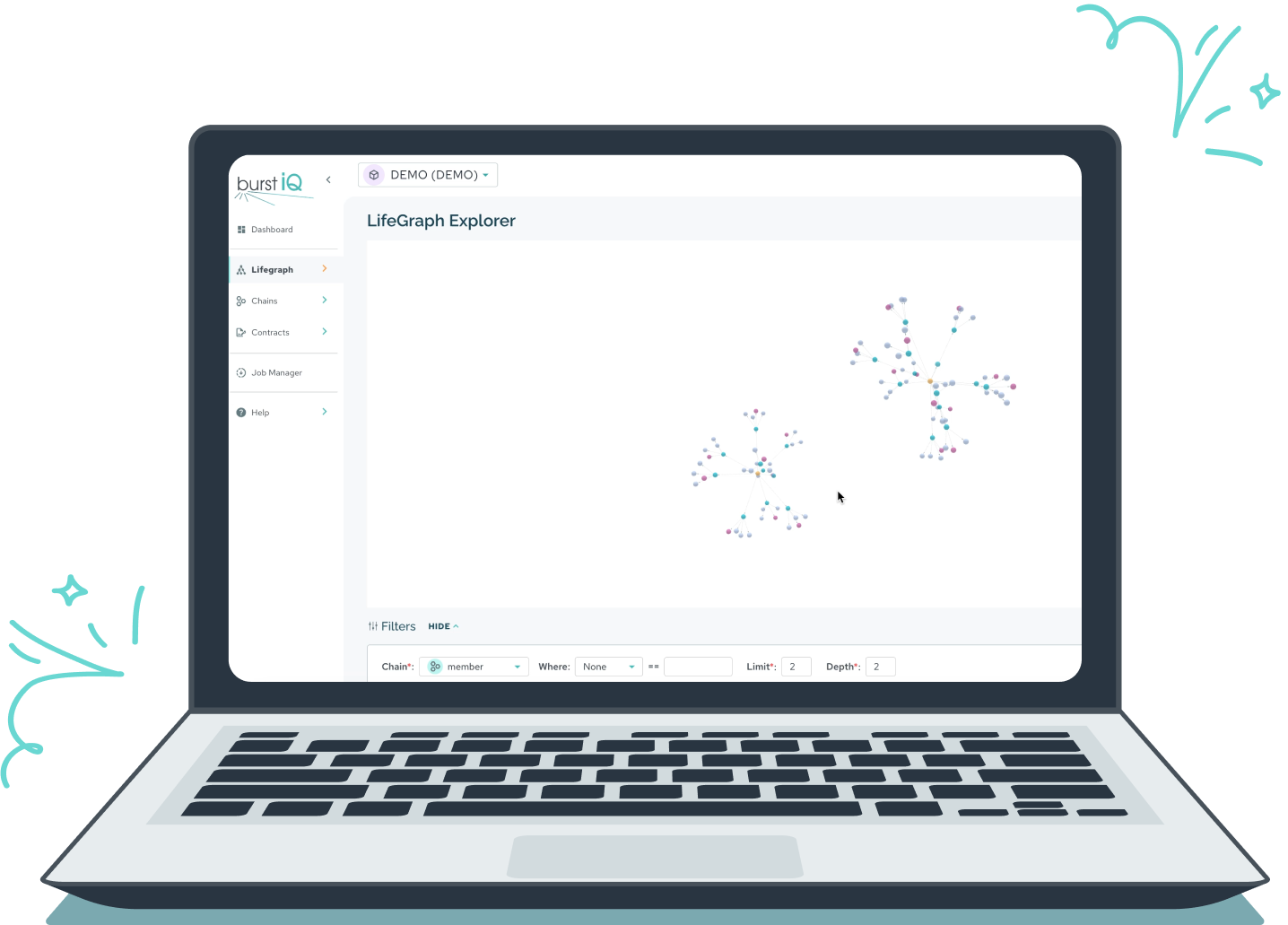
AI can dramatically accelerate operations in most industries, but the cost of a mistake is not unique and largely impacts credibility. Whether you fall into one of these buckets or want to bring a new meaning to LifeGraph, schedule a demo today to see the product firsthand.

Schedule a Demo

AI can dramatically accelerate operations in most industries, but the cost of a mistake is not unique and largely impacts credibility. Whether you fall into one of these buckets or want to bring a new meaning to LifeGraph, schedule a demo today to see the product firsthand.

Schedule
a Demo

AI can dramatically accelerate operations in most industries, but the cost of a mistake is not unique and largely impacts credibility. Whether you fall into one of these buckets or want to bring a new meaning to LifeGraph, schedule a demo today to see the product firsthand.